
Following the introduction of lockdowns our business became horribly quiet, but happily picked up as people began looking for things to do at home and turning their attention to ‘getting those pictures digitised’. For some reason (probably a magical Google search algorithm) our photo restoration service has become very popular. I thought it might be an idea to go into a little depth on what we actually do and the results we hope to obtain, and to clarify what we define as our restoration service.
Firstly though a thank you – our customers have come from Eire and Northern Ireland, Scotland, Wales and England so a good coverage of the British Isles. We have had customers from the Netherlands (hey guys I loved your Eurovision entry!), Germany, France and Gibraltar. Thank you all for entrusting us with your precious family photos, movies and videos.
Your original image, this may be a slide, a negative, a photographic glass plate, a print or a photograph, we will digitise this image (We do NOT alter that physical image. If it is that physical picture you want restored then you need a different kind of specialist!)
We get an idea of what we can hope achieve with your picture fairly quickly and so our second step is to acquire a scan. With our slide scans and negative scans we immediately perform a light restoration, adjusting colour and reducing dust and scratches this happens during the scanning process. Photographic prints are a different ballgame. Our equipment will scan up to A3 sizes and we scan these at as high a resolution as practicable and then apply our restorative steps.
Our the third phase is to examine each scan on screen and perform the edits. We always perform specific restoration work on tiff images. These can be quite large files and over 150mb is quite usual. Does it make much difference editing at this level ? I believe it helps to keep the restorative steps specific to a small area of the image. There is no compression and so the pixels which are affected are specifically identified in this way keeping a very tight control of the restoration process. Jpeg edits are not as precise and a spot edit may become a smear which becomes very obvious in larger prints.
The steps we take are to reduce bright and dark spot on the image. Silverfast software is often helpful during this stage of editing. Where an image is badly contaminated the software can help reduce the effects. Siverfast also helps with scratches on some media although I find it to be very hit and miss.
Now the most difficult part of the process is stitching torn photos. This is a step which may work well ……… or not !!!! It depends on the picture – every time. How bad is the tear, does it cover important detail, for example and eye or perhaps a face. We can sometimes ‘cheat’ by copying and inverting the eye from the other side of the face or applying facial detail that is essentially guesswork. Sometimes this is a great and impressive success, other times a horrible disappointment. The work may be very detailed and require precision. But we do try to get the best result and when a restored image is printed at lets say 6 x 4 inches, that restorative work may be invisible delivering a perfectly acceptable photograph. As the print size becomes larger the restoration may become more visible depending entirely on the work udertaken.
The final result is a fine tiff image which is reproduced as a jpeg for everyday use on tv or computer and the image may be provided to you as a print for an album or to frame and display.
So a couple of anecdotes:
There was a wonderful group picture of newly qualified nurses with their awards. Unfortunately on this negative image one of the eyes of the main charachter had been damaged and lost from the picture. It looked awful and would have been such a disappointment for our client. Another picture had her face at a similar angle though it was a close up. We copied the eye from that picture, resized it and inserted it in the damaged image. The result was superb and even close up examination did not reveal the repair. The alternative would have been to copy and invert the eye from the other side – which worked (yes we tried this) but was not quite as good as our final solution.
We recently had a large printed image to restore from 1918. The picture was in a poor physical condition but had immense historical value both for our clients and for the regiment the image related to. I was reluctant to take the project on as I could see there were immediate problems to tackle but felt that saving a scan of the picture was in the best interests of both the image and our client. The picture was carefully removed from its frame for scanning but the pins holding the picture in place had rusted and there was significant staining and weakening of the picture. The image was relatively undamaged though clearly affected by damp and age related colour loss.
The picture was mounted on an A2 card to help stablise it and prevent further damage. The dust was blown off the surface and the image scanned. (The original picture was replaced in the frame and the client advised to remove the damaged area and reframe the picture.) We worked on the scan restoring the colour and reducing the effects of the age related changes. The result was a print of the original for our client preserving the picture for future generations., a challenging project and the right result!
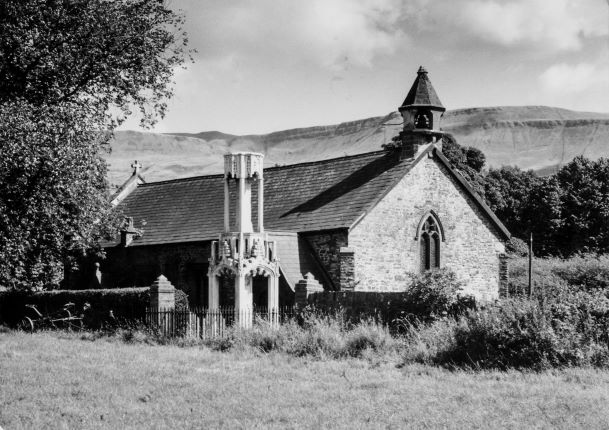
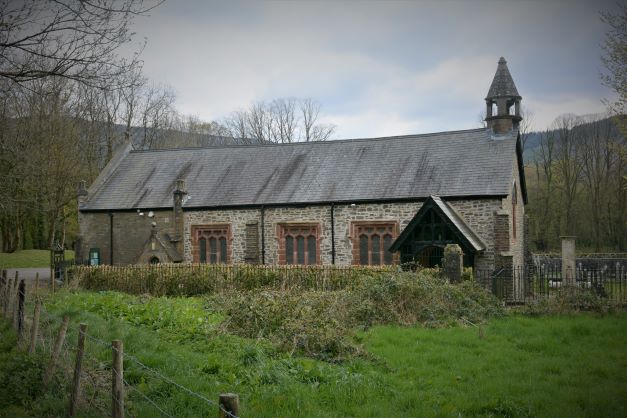
The stories above were for specific restorations but many customers send us batches of slides that have lost colour over the years and we always try to restore these. Usually the customer will have no idea that so much work has gone into bringing back the colour and sharpness but sometimes the images will be beyond saving, even with our technology. Below is one of my favourite restorations, unfortunately not dated.
So there we are. I hope you have a better understanding of what we do and would feel happy to contact us for your scanning and restoration work. If you have any questions please do not hesitate to ask.
David – August 2021.